
Pulaski County Directory Runs
Pulaski County directory research rests on several documented runs, not one gap-free annual set. Arkansas preservation sources cite Little Rock volumes from 1871 through 1975 under various publishers. A separate official bibliography documents R. L. Polk directories for Little Rock, North Little Rock, and Cammack Village from 1920 through 1968. Another source uses Little Rock, Argenta, and North Little Rock volumes from 1900 through 1955. Those spans prove useful coverage, but they do not prove that every year survives.
| Directory collection | Documented span | Repository | Way to consult it |
|---|---|---|---|
| Little Rock directories | 1871-1975, with possible gaps | Roberts Library and Arkansas State Archives | Catalog and onsite holdings; some volumes through library databases |
| Polk three-city run | 1920-1968 | CALS and cited preservation collections | Alphabetical and street sections |
| Little Rock, Argenta, and North Little Rock | 1900-1955 | Roberts Library and historical sources | Use all three place headings |
| Statewide business and local directories | 1840-1999 statewide | Arkansas State Archives | Catalog search, followed by onsite volume review |
| Pulaski County/Little Rock Records | 1814-1970 | UA Little Rock CAHC | Manuscript finding aids and archive consultation |
The statewide archive span is broader than the local run. It must not be read as continuous Pulaski County coverage. Confirm a title, publisher, and year in the holding catalog before planning a visit. A directory citation should name the volume and page, not merely the database that delivered the image.
The documented Pulaski County directory timeline has several firm markers:
- 1871: the earliest locally documented Little Rock volume in the cited preservation research.
- 1900-1955: a run cited under Little Rock, Argenta, and North Little Rock headings.
- 1920-1968: R. L. Polk coverage documented for Little Rock, North Little Rock, and Cammack Village.
- 1975: the end of the broader documented Little Rock span, with gaps still possible.
- 1999: the end of the State Archives’ statewide directory range, not a promise of local annual coverage.
Roberts Library City Directory Desk
CALS Roberts Library is the local first stop when a Pulaski County directory is absent online. The building at 401 President Clinton Avenue houses the Butler Center and UA Little Rock Center for Arkansas History and Culture. Posted research hours are Tuesday through Friday, 10 a.m. to 5 p.m., and Saturday from noon to 4 p.m.; the main phone is 501-320-5700. Its shelves and staff connect directories with newspapers, yearbooks, images, manuscripts, and local finding aids.
The library’s public branch page shows the research setting and current access information.
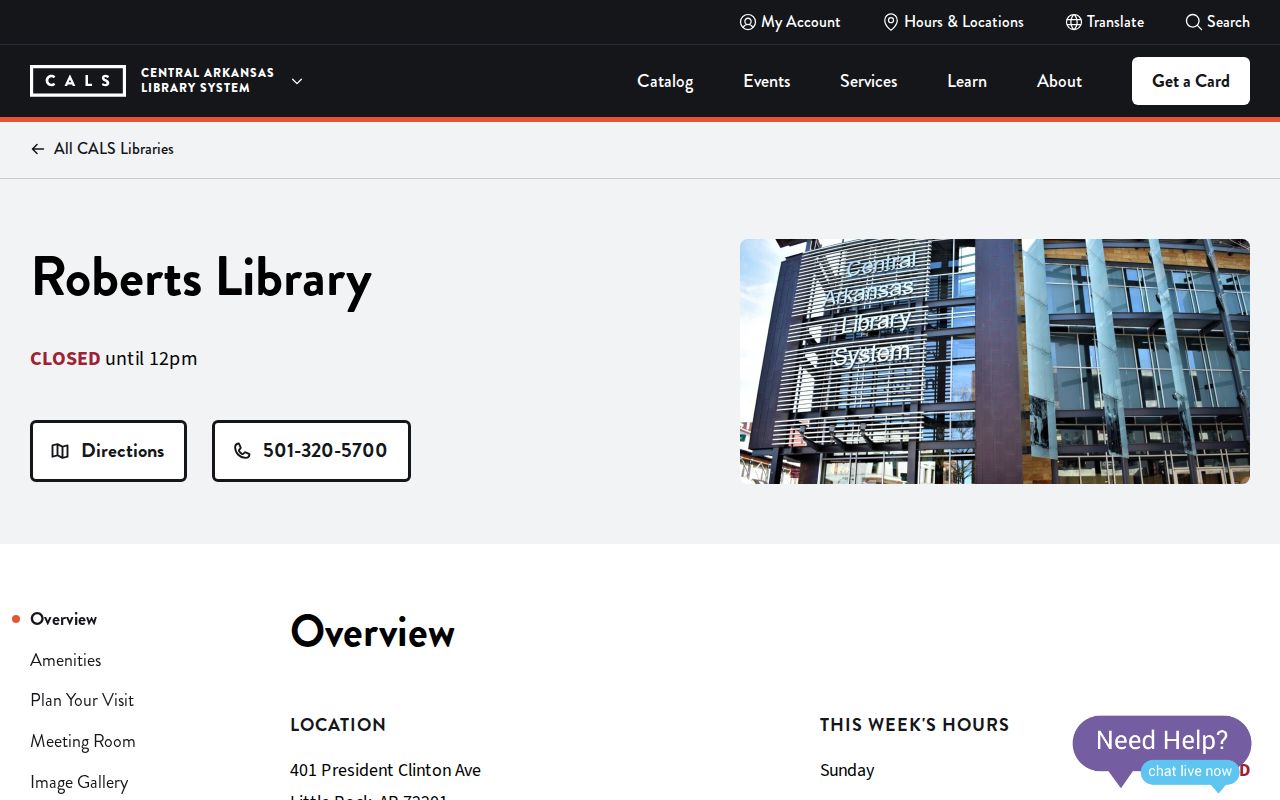
That reading-room route matters because a catalog record may not reveal which years have reverse street sections or whether a licensed image database requires an onsite session. Bring an exact address, alternate street name, rough year, and known surname. Staff can then identify a likely shelf or database without being asked to conduct the whole family history.
Note: Confirm posted hours before travel because reading-room access and archive service can change.
Read Pulaski County Directory Entries
A directory line compresses a surprising amount of evidence. Arkansas Archives guidance says entries usually show a name, address, and occupation. Depending on the year, they may add a spouse, marital status, phone, children, race, wartime service, or a notice that the resident died during the prior year. Each item is a clue tied to that specific edition.
| Name form | Surname, given name, and initials; married women may appear under a husband’s given name in older volumes. |
|---|---|
| Household clue | A spouse in parentheses, a widow notation, or other adults listed at the same address. |
| Work clue | Occupation, employer, or a separate business address. |
| Home clue | House number and street, sometimes paired with an owner or renter code. |
| Cross-check | Phone, death list, street-order entry, or nearby residents. |
The Arkansas State Archives research guidance explains what historical directories can contain and how archive research differs from a simple web search.
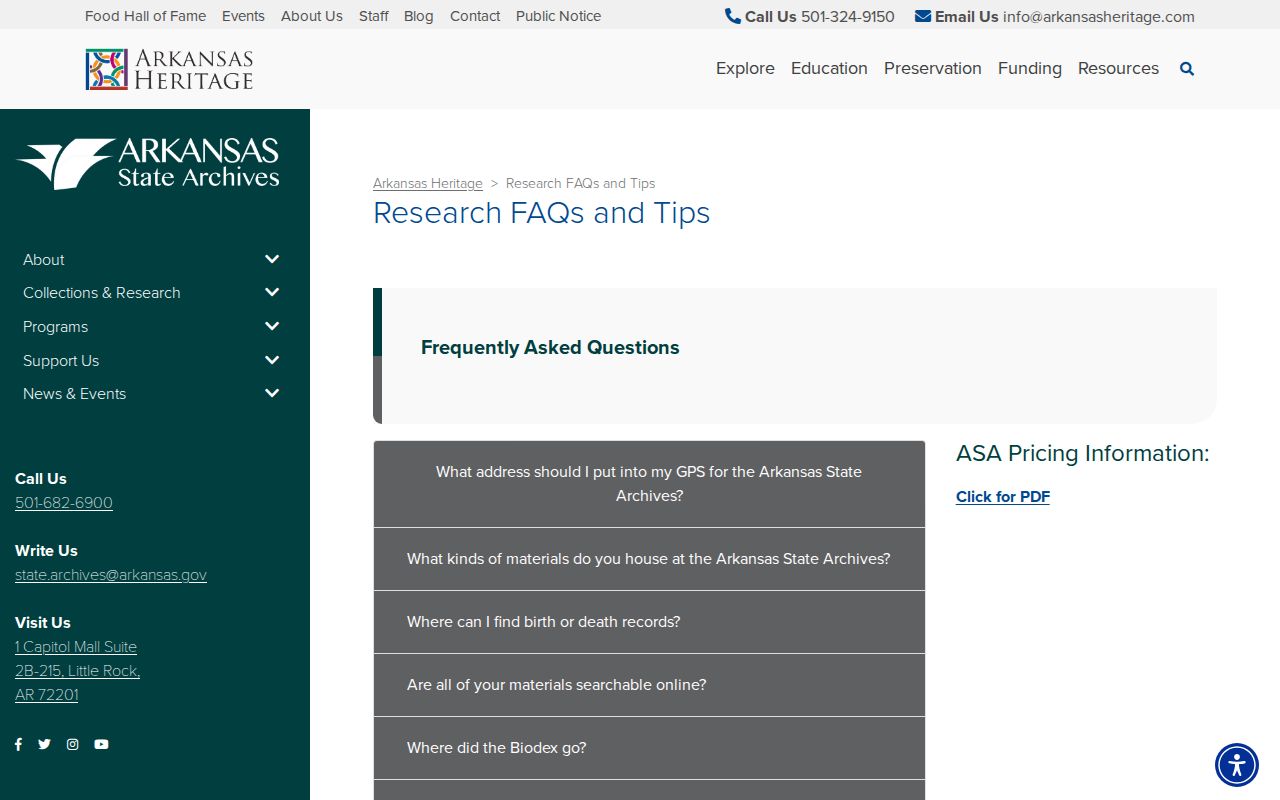
The archive screen is a starting point. The actual Pulaski County directory page and its edition-specific key supply the evidence.
- Criss-cross directory
- A later directory section arranged by street and house number, allowing an address to lead to a listed occupant.
- Householder index
- An address-order list of household heads or listed adults rather than an alphabetical surname list.
- Abbreviation key
- The edition’s own legend for work, home, spouse, widow, boarding, and ownership marks.
Argenta Reshapes Pulaski County Directories
Historic geography changes the words used to search Pulaski County directories. North Little Rock first appeared within Little Rock’s Eighth Ward and then as Argenta before the North Little Rock name took hold. Pulaski Heights became part of Little Rock in 1916. A household can therefore pass from one directory heading to another without moving at all.
Search the same surname under Little Rock, Eighth Ward, Argenta, and North Little Rock when the address lies north of the Arkansas River. For Pulaski Heights, compare the street index before and after annexation. Legal descriptions, old plats, and a stable cross street are better bridges than the modern postal city alone. The county’s two-city core, suburbs, and rural reaches never fit one neat directory shelf.
North Little Rock’s current permit page illustrates how present-day city records remain divided among local departments.
Modern permits do not identify a historic occupant, but they help separate today’s jurisdiction from an older directory heading.
Trace Pulaski County Directory Households
A reliable household trail moves one volume at a time. Skipping decades can conceal a move, a remarriage, a spelling change, or a street renaming. Photograph the title page and key first so every short code remains tied to its publisher and year.
- Choose a target year and search the alphabetical section for surname, initial, and spouse variants.
- Record every listed adult at the address, plus work details and all abbreviations.
- Turn to the reverse street section, when present, and note the nearby house numbers.
- Repeat in the prior and next available volumes, keeping gaps explicit.
- Pair directory findings with a released census, newspaper, deed, obituary, or probate docket.
A missing entry proves very little. The family may have moved outside the publisher’s area, chosen not to list, appeared under initials, or lived in a rural part of Pulaski County beyond the run. Some directories segregated or omitted Black residents, while optical character recognition often breaks names across columns. Search by spouse, work site, address, and neighbor as well as surname.
Pair Pulaski County Directories With Census
Historical directories fill the long intervals between federal population schedules. The 1950 census is the newest public population census under the 72-year release rule; the 1960 schedule is due in 2032. A 1950 Pulaski County volume may provide a near-date address and work clue before the census household is opened.
Use the sources for different tasks. A directory tracks a listed adult and address in a publication year. A released census can name household members and relationships at the enumeration date. A deed identifies an owner and legal parcel, which may differ from the directory occupant. When the goal becomes present-day address research, the Pulaski County street directory handles the modern parcel chain without recasting the historical shelf.
Note: Directory absence, census absence, and deed absence have different causes and should never be treated as the same negative result.
Map Pulaski County City Directory Addresses
The 1913 Sanborn fire-insurance volume gives physical context that a Pulaski County directory line cannot. Its 122 sheets, delivered as 124 digital images, include Little Rock, Argenta, Pulaski Heights, and Sweet Home. Building footprints and uses help show whether the old address marked a house, store, mixed-use site, or a structure later removed.
The Library of Congress Sanborn volume is free and public domain. Match the directory street and house number to the map index, then compare nearby landmarks and cross streets. The map does not name every resident. It explains what stood at the address and helps bridge old geography.
Later local map evidence includes Sanborn citations through 1950 and Little Rock aerial mosaics from 1943, 1960, and 1970. This sequence can separate a household move from demolition, road work, or redevelopment. It is especially useful around West Ninth Street, where urban renewal and I-630 changed the older street fabric.
CAHC Extends Pulaski County Directories
A name lost from mainstream Pulaski County directories may survive in less conventional records. The UA Little Rock Center for Arkansas History and Culture holds the Pulaski County/Little Rock Records collection for 1814 through 1970. Its mix includes taxes, courts, deeds, poll-tax and voting material, pensions, peddler licenses, marriages, births, and registers of officials.
The CAHC manuscript collection catalog also leads to membership directories, minutes, newsletters, and community records.

These holdings are particularly valuable for residents missed by property rolls or commercial publishers. West Ninth Street sources, Black newspapers, church records, oral histories, and the Arkansas State Press can restore people and communities that an alphabetical directory treated unevenly.
Resolve Pulaski County Directory Dead Ends
When a person vanishes from a run, check the next issue’s death list, obituary notices, marriage announcements, deed transfers, and probate docket. Historical newspapers from the 1840s forward add name and address clues, but optical character recognition must be checked against the page image. Cemetery and church records offer further leads. FamilySearch catalog entries may describe useful Pulaski County material even when images cannot be opened remotely.
Use every available access channel. Search archive catalogs and digital objects online, ask Roberts Library staff about exact shelves and licensed databases, consult the State Archives and local historical scholarship, and inspect CAHC finding aids. Federal census and military sources come through NARA, while Sanborn maps come through the Library of Congress. Institutional databases may require a library card or an onsite session.
End with a precise citation. Record the title, publisher, year, page, heading, and image or call number. That small habit lets another researcher repeat the finding and prevents a database index from being mistaken for the historical record itself.