
Pulaski County Previous-Resident Sources
Address history works like a ladder. Each source reaches a different era and describes a different role. A deed can continue before a structure existed, while a directory begins only when its publisher covered the address. The ranges below are documented local holdings, not a claim that every year or every Pulaski County address appears.
| Source | Years it can cover | Where held | What it adds |
|---|---|---|---|
| Web deed records | 1994 to present | Circuit and County Clerk website | Recent owners, parties, instruments, legal descriptions |
| Scanned land records | 1819 to present | Courthouse research room | Earlier grantor-grantee chain and deed books |
| Little Rock city directories | Documented 1871 to 1975, with possible gaps | Roberts Library and State Archives | Occupants, work, spouse clues, and street sections |
| Polk three-city run | Documented 1920 to 1968 | CALS and cited preservation sources | Little Rock, North Little Rock, and Cammack Village entries |
| Federal census | Released schedules through 1950 | NARA and library databases | Household composition at ten-year points |
| Sanborn maps | Online 1913 volume; local citations through 1950 | Library of Congress and CALS | Building footprint, use, materials, and old address context |
| Historic aerials | 1943, 1960, and 1970 | Little Rock GIS | Structure and neighborhood change |
| Permit records | Digitized span not stated | Little Rock CDR or city custodian | Work, applicant role, status, and dates |
Start near the present when the goal is a full chain. Begin with a known decade when the question concerns one past resident. In either case, anchor the work to the parcel and save the exact source date.
Reverse Pulaski County Deed Chains
The present parcel supplies the stable key. Pull the situs address, parcel number, owner of record, mailing address, and exact legal description from the Pulaski County Assessor. Mailing and situs addresses must remain separate. One says where tax mail goes; the other locates the parcel. Neither proves who occupies the house.
- Use the current owner's name and the assessor's sale clue to find an acquisition deed. Confirm the legal description before accepting the match.
- Record the grantee, grantor, recording date, instrument or document number, deed book and page when shown, and image access.
- Take the seller, who appears as grantor, and search that party as a grantee in an earlier purchase.
- Repeat without losing the lot, block, subdivision, or other legal land identity. A party may own several parcels.
- At the 1994 web boundary, move to the clerk research room and continue through scans, grantor-grantee indexes, microfiche, and deed books.
The deed chain identifies owners and legal transfers. It does not by itself answer who lived here before. A trust, estate, business, or absentee owner may stand between the land and the household.
Pulaski County Address Record Terms
Three terms keep a backward search on course. They recur in clerk indexes, deeds, plats, and house-history notes.
- Grantor and grantee
- The grantor gives or conveys an interest; the grantee receives it. In a basic sale, seller and buyer often fill these roles.
- Chain of title
- The linked series of recorded transfers for the same legal parcel. It is followed deed by deed, not by surname alone.
- Legal description
- The recorded land wording, often using subdivision, block, and lot. It is more stable than a house number.
- Criss-cross directory
- An address-arranged directory that lets a street and house number lead to a listed occupant.
Write down name variants as they appear. Middle initials, trust styles, corporate endings, and spelling shifts can break a search if the terms are silently standardized.
Pulaski County Previous Residents Before 1994
The clerk's public web review starts in 1994, but scanned land holdings in the research room reach 1819. A blank online search before the cutoff therefore means “change channels,” not “no deed.” The office also reports microfiche from 1945 through 1977.
Research computers are offered in two-hour blocks Monday through Thursday at 8:15, 10:15, 12:15, and 2:15. The clerk states that appointments cannot be made by phone or email. Follow the booking method on the Real Estate Department page, then bring the last known owner, legal description, date range, and every document reference already found.
Assessor staff at 201 S. Broadway, Suite 310, can help with current parcel data, and the clerk's land research is at 401 W. Markham. Phone channels include 501-340-6170 for the assessor and 501-340-8433 for Real Estate. A narrow Arkansas FOIA request may seek an existing roll or identified record, but staff are not required to construct a title abstract.
Note: Ask for a plain or certified copy by exact document reference after the index work is complete.
Pulaski County Past-Resident Households
Directories identify occupants more often than deeds do. Select a year near a known transfer or census. Photograph or note the title page, copyright date, and abbreviation key, then search the alphabetical section for surname variants. Record each adult shown at the address. Next, inspect the reverse street section for the same house number and nearby entries.
- Place the directory entry on a dated line and note spouse, widow, work, home, phone, and owner-or-renter codes only as that volume defines them.
- Pair the entry with a released census year. The 1950 census is the newest public population schedule under the 72-year rule.
- Compare household names, ages, relationships, work, and neighbors. Do not force a match when the facts conflict.
- Move one directory issue backward at a time. Treat a disappearance as a clue, then check death lists, newspapers, marriage notices, probate, and deeds.
The collection runs and entry conventions belong to the Pulaski County city directory shelf. For previous residents, the task is narrower: apply those volumes to one legal parcel and one address trail.
Map Pulaski County Previous Residents
A name can disappear because the building changed, not because the household moved. The 1913 Sanborn volume offers 122 sheets across 124 digital images and includes Little Rock, Argenta, Pulaski Heights, and Sweet Home. It can show a structure's footprint, use, construction, and old address setting. Later Sanborn citations through 1950 and Little Rock aerial mosaics from 1943, 1960, and 1970 add new checkpoints.
Overlay dates conceptually: deed transfer, directory occupant, census household, map footprint, aerial presence, and permit work. When the land chain starts before the structure, that is expected. A newer house may first appear in an aerial or permit record even though its parcel history reaches much farther back.
Historic preservation nominations can also function as compact house-history files. Their source notes often cite exact deed books, tax cards, directory years, maps, newspapers, obituaries, and interviews. Use those citations as leads, then verify each original item.
Pulaski County Address Names Move
Historical geography changes the search terms. North Little Rock was once Little Rock's Eighth Ward and later Argenta. Pulaski Heights was annexed to Little Rock in 1916. An old directory may file the same fixed place under another city heading even though the household never moved. Across the county, a postal Little Rock line can also disagree with municipal limits or taxing jurisdiction.
Use the legal description, recorded plat, directory street index, and annexation maps to bridge those breaks. The Little Rock map directory includes post-1943 annexations and historic layers. No official comprehensive countywide street-renumbering concordance was located, so do not assign a supposed renumbering year without a cited record.
This geography layer matters most in Argenta, Pulaski Heights, older streetcar suburbs, and areas changed by I-630 or urban renewal. In rural Roland, Scott, Hensley, and county-edge postal zones, directories may be thin, making land, census, church, cemetery, and election records more important.
Close Pulaski County Resident Trails
Probate and obituary evidence can explain a transfer that has no ordinary sale. Search a decedent and personal representative under name variants. A public docket can reveal party roles, case number, court, filed date, status, and event entries. The actual file may contain a will, appointment, order, affidavit, or deed reference that connects heirs to the parcel.
The Arkansas Judiciary's Search ARCourts migration page documents the move from Public CourtConnect to the newer public search.
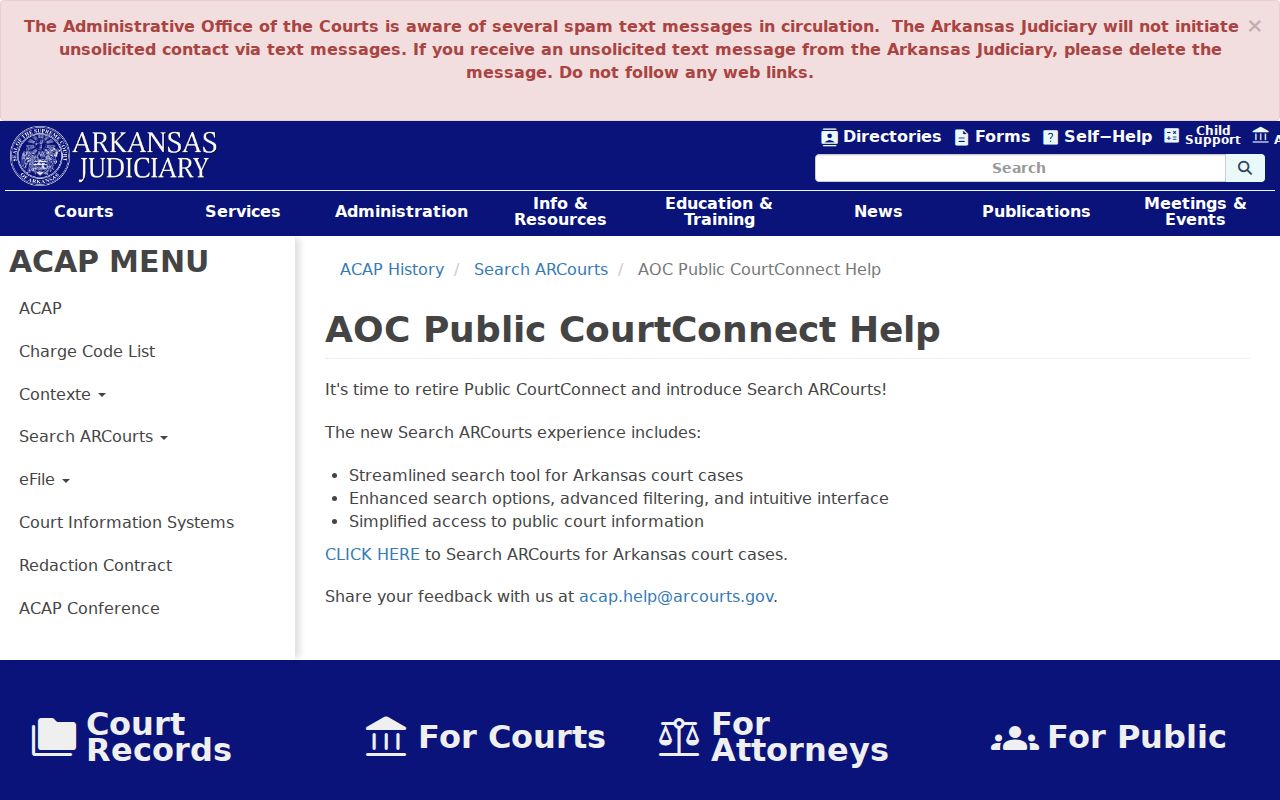
The public docket is a locator. Save the case number and court, then request the needed pleading or order from the clerk when documents are not displayed.
Older closed files may be stored offsite. Ask about retrieval time instead of concluding that they are gone. Sealed, juvenile, and adoption material remains restricted at every channel.
Pulaski County Previous-Resident Vital Clues
Vital records can confirm a life event, but access depends on the record and the applicant. The county clerk creates and keeps the marriage license, the circuit clerk holds a divorce decree, and Arkansas Department of Health Vital Records issues statewide marriage and divorce coupons. A coupon confirms a reported event; it is not the full court decree.
The Arkansas vital-record disclosure rule sets the authorization boundary displayed in the captured source.
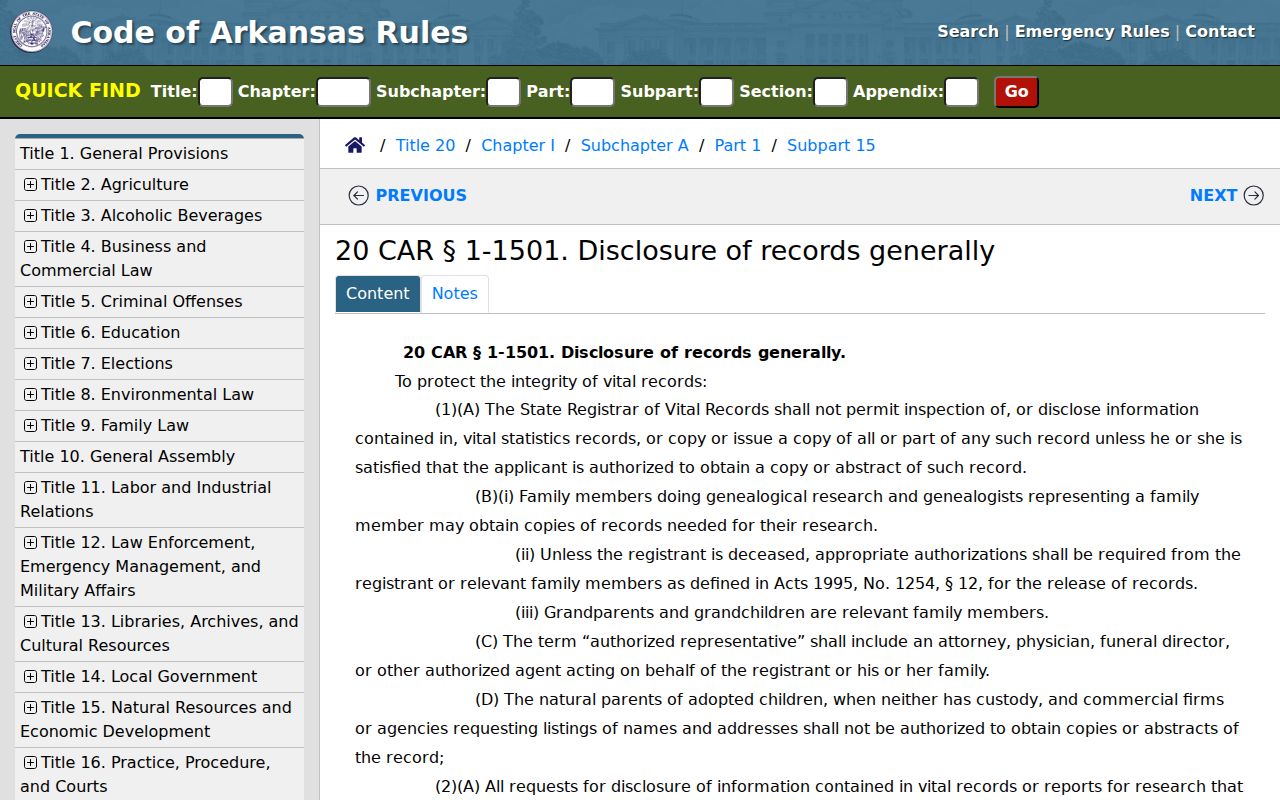
The rule marks an honest endpoint for restricted material. Newspapers, cemetery records, church sources, probate, and released census schedules may still support family history without bypassing eligibility controls.
Pulaski County Past-Resident Boundaries
Owners, occupants, applicants, heirs, and tax-mail recipients should remain separate in the final timeline. A directory omission may reflect a gap year, rural coverage, publisher practice, race or gender conventions, initials, or optical-character-recognition errors. It does not prove that a person was absent. Search spouses, work, neighbors, and address variants before drawing a conclusion.
Protected addresses, sealed court records, and restricted vital certificates are designed limits. Do not attempt to reconstruct a protected modern address from historical clues. Date each finding and cite the actual volume, page, image, parcel, case, or instrument rather than the search screen alone.
Lawful use. Research Pulaski County previous residents for house history, genealogy, heirs, or personal curiosity. Never use a result to stalk, harass, threaten, or expose a protected person.